
Why Do Major Luxury Brands Continue to Avoid Andorra? “The Problem Is Not the Customers or the Law, but the Ecosystem”
Brands such as Louis Vuitton, Prada and Dior have studied the Principality, but have ruled out opening stores there because the current model does not meet their standards


For decades, Andorra has been one of the commercial capitals of the Pyrenees. Every year, it attracts millions of visitors, generates high levels of tourist spending and has one of the highest GDP per capita figures in Europe. Yet it remains absent from the map of the world’s major international luxury brands.
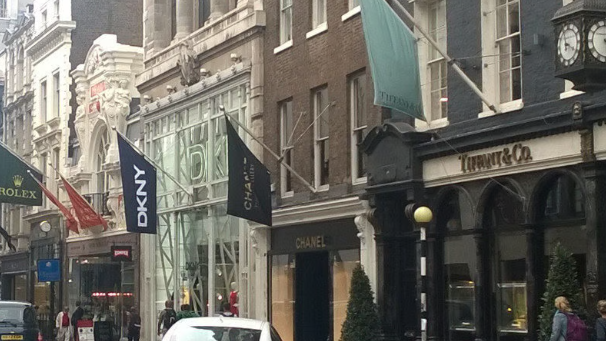
While streets such as Avenue Montaigne in Paris, Via Montenapoleone in Milan, Bond Street in London, Passeig de Gràcia in Barcelona and Fifth Avenue in New York are home to flagship stores belonging to Louis Vuitton, Dior, Prada, Hermès and Chanel, Andorra continues to struggle to attract these brands despite its tax advantages and strong commercial appeal.
Why?
According to an international industry expert consulted by La Veu Lliure, the answer has nothing to do with taxation, the number of tourists or the purchasing power of customers.
“The problem is not that Andorra has no buyers. The problem is that there is no luxury ecosystem.”
The expert explains that major international groups such as LVMH, which owns more than 75 brands — including Louis Vuitton, Dior, Loewe, Fendi, Givenchy, Celine, Berluti and Loro Piana — do not simply assess the availability of a retail unit. The first document they request when considering a city is a detailed map of the street.
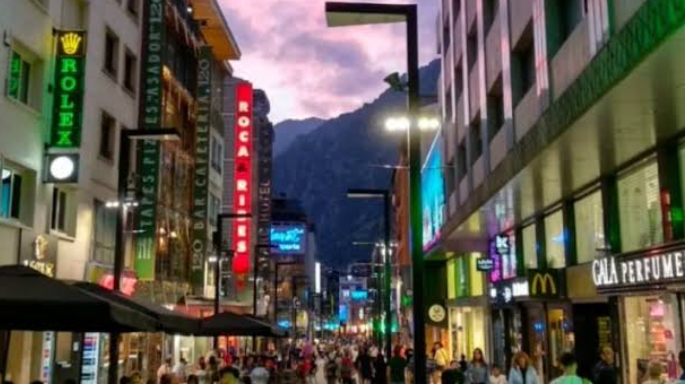
They want to know who occupies each building, what type of businesses operate there, what businesses could open in the future, the architectural quality of the properties, pedestrian traffic and even the image conveyed by the surrounding area.
“The image is practically as important as the product. If a luxury brand shares a street with businesses that do not fit its positioning, it simply will not go there.”
According to the specialist, this is one of the main differences between Andorra and the major European capitals.
“You cannot put Louis Vuitton next to a Taco Bell.”
The expert is particularly direct when explaining the issue.
“If you put a Louis Vuitton next to a Taco Bell or a Popeyes, it will not work. This is not a local decision. Decisions are made in Paris, Milan or New York. The brand decides how it wants to be perceived in every city around the world.”
For this reason, many of these companies would rather give up a location altogether than establish themselves in an environment they consider incompatible with their positioning.
Andorra Has Already Been Assessed
According to the expert, Andorra has been studied several times by the real estate teams of major luxury groups.
The area that generates the most interest is the section of Avinguda Carlemany between the former Crèdit Andorrà building and the Super U, due to its concentration of people, the width of its streets and its commercial potential.
However, the project repeatedly encounters the same obstacle.
“They practically need an entire street. An anchor brand such as Louis Vuitton then attracts the rest of the group and other brands. But that requires bringing many property owners together and controlling the surrounding environment.”
Luxury Also Sells Architecture
The expert believes Andorra faces another disadvantage: its commercial property stock has gradually aged, and there are very few buildings specifically designed to accommodate major international flagship stores.
Unlike Paris, London or Barcelona, where many brands directly acquire buildings in order to have complete control over their image, this option is far more complicated in the Principality.
The specialist even recalls that LVMH acquired the property housing its historic Champs-Élysées store in order to guarantee full control of the space during its renovation.
Louis Vuitton Considered Andorra
The expert claims that Louis Vuitton did consider opening a store in Andorra, but the company ultimately abandoned the project.
“It was not a question of potential sales. It was a question of the surrounding environment.”
Rolex Could Also Reconsider Its Presence
According to the expert consulted by La Veu Lliure, the situation also affects brands that are already present in the country.
The specialist claims that, according to information available to him, Rolex could be reviewing the future of its Andorran store, despite it being a long-established presence in the Principality.
The expert argues that the debate is not about commercial performance, but rather the context in which the brand operates.
“Rolex is part of a different-level commercial ecosystem. These brands want to share space with other companies in the same segment. When that does not happen, the situation is constantly reassessed.”
La Veu Lliure has been unable to independently verify this information with Rolex, which has not commented on the matter.
“It Is Not a Demand Problem”
The expert concludes that Andorra still has the potential to become a luxury destination, but believes long-term urban and commercial planning is essential.
“It is not a problem with customers. The customers are already here. The problem is creating a space that makes these brands feel comfortable. Without that ecosystem, Louis Vuitton, Prada, Dior and Hermès will continue to choose other destinations.”
The expert believes the future of luxury in Andorra does not necessarily lie in the traditional commercial centre. In fact, he points to new urban developments such as Auvinyà as potential locations that could meet the requirements of major luxury brands, provided they are planned from the outset with a coherent retail offering.
“It is not so much about whether it is in the centre or not. What these brands need is an environment designed for them, with modern architecture, large retail spaces and control over the entire commercial ecosystem. If you have that, the location becomes secondary.”
According to the specialist, creating a new space can, in many cases, be easier than trying to adapt existing streets where businesses with very different profiles operate side by side.
The expert also believes that part of the responsibility lies with the owners of commercial premises and buildings. In his view, if Andorra wants to attract the world's major international luxury brands, it will require a shared, long-term vision among the different players in the real estate sector.
“Ultimately, the question is what we want. Do we always prioritise the highest rent, even if it means renting to any operator, or do we build an ecosystem that eventually attracts brands that increase the value of the entire area?”
That, according to the specialist, is the key question Andorra must answer if it wants to move from being a major shopping destination to becoming a genuine international luxury hub.
Comments
Dubto molt que els…
Dubto molt que els propietaris de tot un carrer venguin les seves propietats per això, com a molt un lloguer de llarga durada. I els edificis nous (les torres), per allà al darrere no passa ni Cristo.
Andorra ha crescut massa ràpid i en mans de gent sense visió de futur, curt-terministes que han actuat pel bé de les seves butxaques i les dels seus amics, pero només a curt plaç.
Ben planificat, a hores d'ara podriem tenir un país esplendorós, en canvi tenim molta aparença pero que amenaça d'esfondrar-se amb un esternut mal oportú.
Els edificis haurien d'haver mantingut estètica conjunta, als carrers comercials preveure bones amplades, una zona central amb arbres i aigua, zones on els edificis fossin baixos per deixar entrar llum i veure el paisatge. Endreçar els comerços per conjunts temàtics (qualitat, preu, etc).
Per tot aixó calia ser valent i planificar a molts anys vista i respectar-ho. En canvi hem patit equips comunals i de govern que han volgut fer la seva i desfer el que havien fet els altres, copiar el que ja existia a altres paroquies, gastar diners en accions turistiques enlloc d'invertir en la base: una bona planificació urbanistica.
Podriem tenir un Pas de la Casa que fos l'enveja dels resorts d'alta muntanya.
Podriem tenir una vall central que fos l'enveja de qualsevol ciutat mitjana, podriem tenir parroquies cadascuna explotant el seu punt fort.
En canvi tenim un nyap global que no va enlloc, sense personalitat i gris.